

Sessions
Explore the complete archive of FIPP Congress 2025, every keynote, panel, and conversation available on-demand. This repository is designed to give publishing leaders access to the insights shaping the future of media.
Welcome & Housekeeping
Elleyne Aldine opened Congress with warmth, wit, and essential safety notes — before inviting delegates to experience a powerful flamenco performance celebrating Spain’s passion, creativity, and storytelling spirit.
Official Opening of the FIPP World Media Congress 2025
Welcome to Congress 2025 from FIPP and ARI
Yulia Boyle (FIPP Chair) and Andrés Rodríguez (President, ARI Spain) opened Congress by bringing FIPP “home” to Madrid — where it was founded 100 years ago.
Boyle called on delegates to “tune, prototype, and share” to shape the next century of global media collaboration. Rodríguez celebrated Spain’s creative and economic resurgence, declaring: “Print is haute couture, digital is prêt-à-porter — and trust in strong brands has never mattered more.”
TIME at 102: Blending Legacy and Innovation in Today's Global Media Landscape
Mark Howard (COO, TIME) shared how Time 3.0 is redefining a century-old icon — from dropping its paywall to uphold accessibility and trust, to launching TIME Africa and TIME France as part of a bold global expansion.
With 15 AI partnerships (OpenAI, Perplexity, Amazon, Scale AI), TIME is using technology to protect IP, enhance storytelling, and deepen engagement through tools like its AI toolbar and “Henry & Lucy” daily audio briefings.
Howard’s message: “Don’t let AI happen to you — let AI happen for you.”
How Semafor Is Becoming a Global Media Winner
Justin Smith (Co-Founder & CEO, Semafor) shares how the three-year-old news startup became profitable and global fast — building an “events-first, journalism-powered” model that fights bias, cuts information overload, and speaks to the world beyond the West.
From Washington’s new CEO summit to bureaus across Africa and the Gulf, Smith says: “Great journalism, great people, and a clear mission can still build a global brand.”
From Pages to Platforms and People: State of the Industry
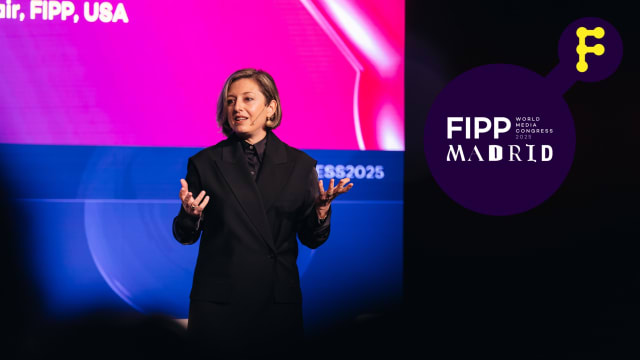
Alastair Lewis (FIPP CEO) opened Congress with a powerful call for unity and optimism as FIPP marks its 100th year.
He celebrated the industry’s enduring strengths — human-curated storytelling, trust, and community — while announcing FIPP’s planned merger with WAN-IFRA, creating a stronger global voice for publishers.
His message: “Human first — curated, credible, connected. That’s how magazine media will thrive in the AI age.”
Official Welcome to the CIty of Madrid
Almudena Maíllo invites delegates to explore “the land of inspiration” — a city of culture, cuisine, and stories waiting to be told.
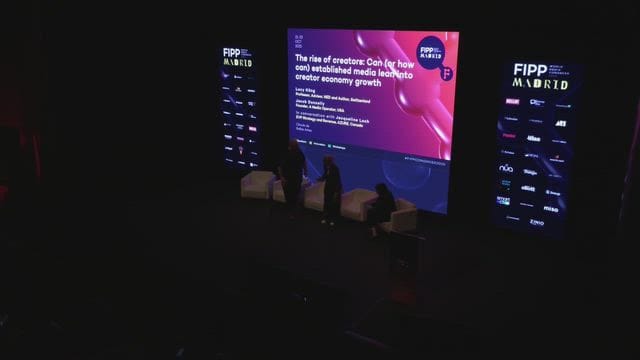
The rise of Creators: Can (or How Can) established media lean into creator economy growth
Jacqueline Loch (AZURE) explores how legacy media can thrive in the creator era with Jacob Donnelly and Lucy Kueng.
Creators move fast, connect directly, and own their audiences — while traditional media must unlearn old habits and build lean, collaborative models.
Kueng put it bluntly: “The audience is already at the party — it’s time for media to gate-crash.”
Redefining Local: Community, Creativity, and the Vogue & GQ Effect
Inés Lorenzo (Vogue Spain) and Daniel Bara (GQ Spain) show how Condé Nast’s Spanish titles turn local creativity into global influence.
Their formula: culture as KPI, community as currency. From championing Spanish talent to leading Vogue and GQ’s top-performing TikToks worldwide — local stories are driving global success.
How The Economist Has Become So Much More Than a Magazine
Luke Bradley-Jones (CEO, The Economist) reveals how the 180-year-old brand continues to grow — balancing profitability with purpose.
Two-thirds of revenue now comes from digital, podcasts, and video, while new ventures like Economist Impact and Economist Education expand its reach.
His goal: steady, sustainable growth to safeguard fearless, fact-based journalism for the next 180 years.
The Attention Paradox: Why Media's Biggest Asset is Vanishing ... And What To Do About It
Brady Brim-DeForest (CEO, Kudu) explored how attention — media’s core currency — is being redefined in the age of AI.
As algorithms reshape consumption, he urged publishers to focus less on reach and more on resonance, emotion, and authenticity.
Future media, he predicted, will be personalised, outcome-driven, and emotionally intelligent — where “credibility and meaning” become the new metrics of value.
Innovation in Media 2025: A Crucial Year for AI, Humanity, and the Future of Journalism
Juan Señor (FIPP Innovation Media Consulting) delivered a passionate wake-up call: “The internet is dying — and we must build what comes next.”
He warned publishers to prepare for zero-click traffic and an AI-driven world, urging them to defend their IP, license fairly, and label content as “human-made.”
His rallying cry: soul and spine — journalism with personality, courage, and purpose — to stand out from the coming wave of AI “slop.”
Scotch and Watch Live: Opportunities for publishers as Big Tech switches mission
Ricky Sutton and Chris Duncan delivered a sharp, fast-moving live edition of Scotch & Watch, unpacking how Big Tech’s dominance is fracturing — and why that’s good news for publishers.
They forecast antitrust breakups for Google and Meta, the rise of “pay-per-crawl” AI licensing, and a return to direct sales powered by AI agents.
Their rallying call: “Publishers didn’t fail — a wrong thing was done to us. The turning point has already happened. Be proud of what you do.”
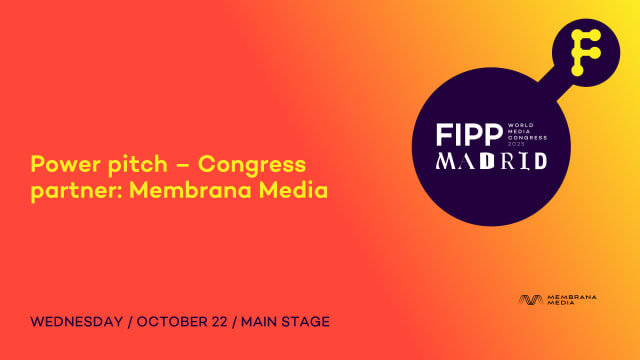
Power pitch – Congress partner: Membrana Media
Industry Challenges: Acting Local, Being Global – Subscription Insights from the UK for International Growth
Mark Judd (CDS Global) shared how UK publishers are adapting to change through bundling, memberships, and customer empowerment.
Print is becoming a premium experience, while flexibility and transparency now drive loyalty. Examples like Empire VIP show how paid memberships with exclusive access can more than double revenue per reader.
His advice: test, bundle, and give control back to customers — when they manage the relationship, they stay longer.
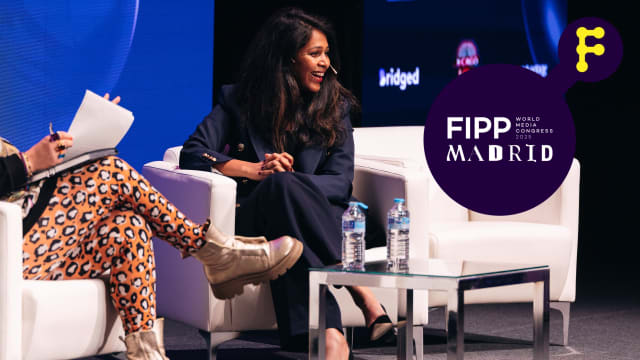
Subscription Growth Without Gimmicks: How the 168-year-old The Atlantic Maintains An Edge in the Multiplatform World
Meera Garibaldi (Chief Growth Officer, The Atlantic) explained how the 169-year-old brand grew to 1.4 million subscribers through clarity, conviction, and trust in its audience.
The Atlantic’s mission — to uphold independent journalism and the American idea — underpins a premium model with subscribers paying $80+ a year.
Garibaldi rejects free trials and gimmicks: “Either people are willing to pay, or not — so ask them to pay.”
The Lasting Value of Paper: Cultivating Trust, Impact, and Inspiration in a Digital Landscape
Kati Murto (UPM Communication Papers) championed print as a medium of trust, learning, and inspiration — not nostalgia.
Nearly half of Europeans still prefer magazines in print, and print advertising delivers six times ROI compared to digital.
She positioned paper as a sustainable, circular product, noting UPM plants four trees for every one harvested and aims to cut emissions to 100kg CO₂ per ton by 2030.
Her message: Print’s future is not past — it’s purpose, sustainability, and value reborn.
How Burda Navigates Structural and Organisational Shifts in Uncertain Times
Martin Wissa (Burda Germany) outlined how Europe’s largest magazine publisher is re-engineering its structure to stay agile amid AI disruption and Google traffic declines.
Burda is shifting from reach to engagement, building direct user relationships through paid apps, e-commerce, and lead-generation partnerships — reducing reliance on ad-driven models.
Wissa emphasized entrepreneurial teams, lean tech, and decentralised agility: “Every brand team must act like business owners — fast, experimental, and on mission.”
His core belief: change the culture first, then the structure.
AI in Action: Transforming Media Operations and Strategy
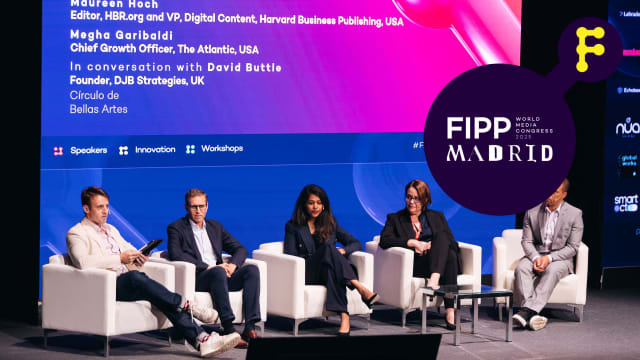
Mark Howard (TIME), Meera Garibaldi (The Atlantic), Maureen Hoch (Harvard Business Review), and Paul Thompson (UK Parliament Publishing) explored how AI is reshaping every layer of media — from newsroom to business model.
Publishers are using AI to boost efficiency, automate workflows, enhance accessibility, and test dynamic paywalls and conversational search. Yet all agreed: human-led journalism remains at the core.
Howard predicted new AI marketplaces for content licensing, while Garibaldi urged unity: “We must shape the AI future — not just react to it.”
Their shared outlook: human integrity + smart AI adoption = sustainable media.
Storytelling in an AI world: How Positivity, Integrity and Community are Powering the Future of HELLO! and HOLA!
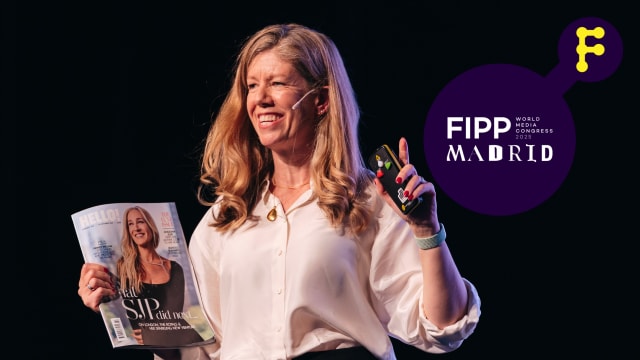
Charlotte Stockdale (HELLO! Group) showed how heritage and heart still win in an AI age.
HELLO! and HOLA! are building communities, not just audiences — from the HELLO! Royal Club to lifestyle networks — powered by trust, emotion, and human connection.
“Community, communication, and connection — the three Cs AI can’t do.”
Global Content Licensing: Your Blueprint for Incremental Revenue
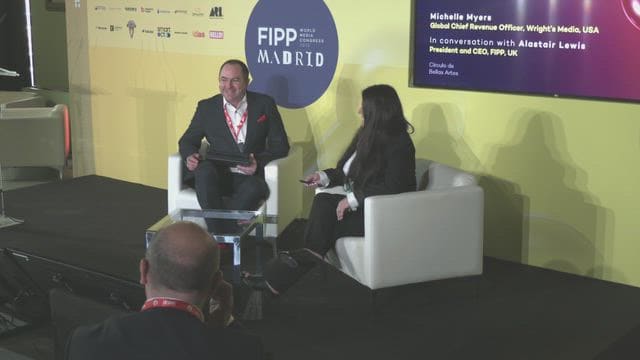
Michelle Myers showed how publishers can monetise existing content through structured licensing of awards, quotes, and logos. Rights Media’s AI tools now track and monetise unauthorised use, offering a quick, high-margin way to diversify revenue as ad and search income shrink.
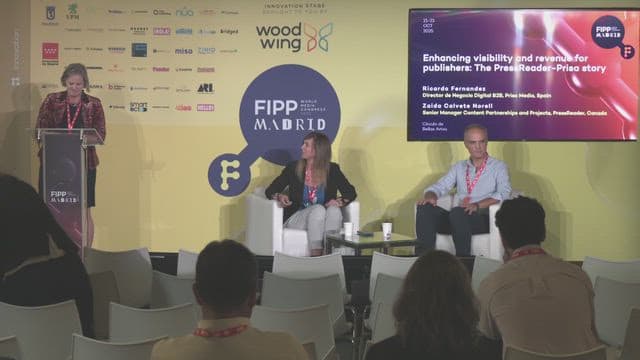
Enhancing Visibility and Revenue for Publishers: The PressReader–Prisa Story
PressReader and Prisa Media outlined how digital editions and B2B distribution extend reach and revenue for Spanish-language journalism. Their collaboration combines premium app experiences with monetisation through hotels, airlines, and global partnerships, enriching reader loyalty and brand visibility worldwide.
Beyond the Likes: Inside Gala’s Global Expansion and Monetisation Recipe
Gala detailed how it turned celebrity coverage into a global social-media powerhouse, generating billions of monthly video views. By pairing exclusive red-carpet access with brand partnerships, the team has built new revenue from events, luxury collaborations, and influencer-style storytelling.
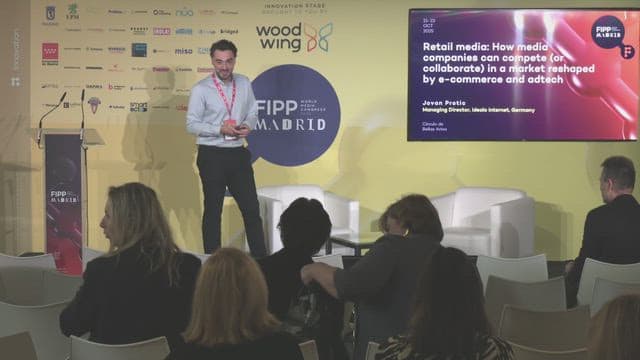
Retail Media: How Media Companies Can Compete (or Collaborate) in a Market Reshaped by E-commerce and AdTech
Jovan Protić explained how retail media—ads placed on e-commerce sites—is overtaking traditional digital formats. He urged publishers to form alliances with price-comparison platforms and retailers to capture performance-driven ad budgets and secure a stronger role in the commerce-media ecosystem.
Lessons from America: What Media Owners Can Learn from Selling Advertising in the USA
Jim Elliot shared insights on market entry for global publishers eyeing the US. He stressed realistic budgeting, regional focus, and trusted local representation. The discussion positioned partnerships and legal awareness as key to profitable cross-Atlantic expansion.
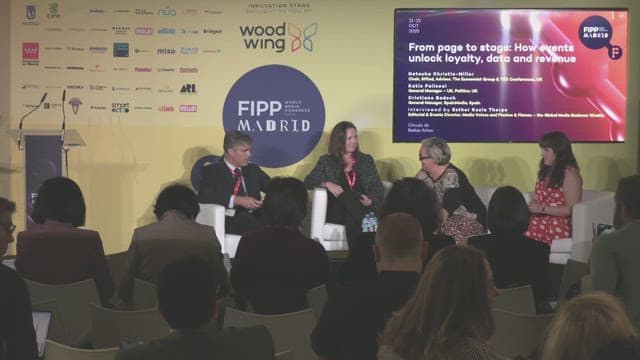
From Page to Stage: How Events Unlock Loyalty, Data and Revenue
This panel showed how events extend journalism into real-world engagement. Speakers shared models from Money 2020, Politico’s pop-up pubs, and Forbes Spain’s brand communities—revealing that events thrive when built around audience purpose, measurable outcomes, and authentic editorial alignment.
Events as the New Media – How AI is Transforming Engagement and Revenue Models
Terrapinn detailed how AI streamlines operations and improves event experiences—from 24/7 attendee chatbots to sales forecasting and personalised marketing via WhatsApp. Their agile “test-fast, scale-fast” approach has embedded AI across 90 events, boosting both efficiency and customer experience.
From Helsinki to Everywhere: Going Global with AI-assisted Translation
Maija Koski shared how Finnish lifestyle brand Koti & Design expanded globally through AI-assisted translation. By combining generative tools with human editing, Aller created a cost-efficient workflow to reach English-speaking audiences and new advertisers while preserving journalistic tone.
AI and Media in China: Insights from a Publisher’s Perspective
Henry Zhang described how Chinese publishers are integrating AI across professional, educational, and mass-market publishing. He positioned quality data as essential to ethical AI, calling for global standards that ensure credible, traceable, and commercially sustainable content creation.
The Next Chapter for Magazine Media in China
Liu Jing traced the 75-year evolution of Chinese National Geography, highlighting its success in blending science, art, and business. The magazine’s experiential travel, exhibitions, and social-media ecosystem show how print heritage can thrive through innovation and cross-media storytelling.
From Brazil to the World: Insights from Globo’s Transformation
Eliseu Barreira Junior outlined how Globo evolved from a broadcaster into a digital ecosystem spanning streaming, news, and data platforms. By uniting linear TV and on-demand products, Globo has deepened engagement and strengthened its position against global tech giants.
The Business Behind K-Content and J-Content
Angie Byun explored how Korean and Japanese entertainment have become global powerhouses. Through fan economies, multi-platform storytelling, and brand partnerships, K-Pop, K-Drama, and Anime demonstrate how community, data, and creative discipline drive billion-dollar media ecosystems.
How TNL Mediagene is Transforming Media in the Region
Joey Chung presented TNL MediaGene’s rapid rise as a pan-Asian digital group merging media, data, AI, and e-commerce. Its integrated model—25 brands across four languages—shows how regional publishers can scale through acquisitions, analytics, and in-house tech innovation.
AI and the New Geopolitical Order: How AI will Reshape Global Power Dynamics
AI is transforming not only industries but the global balance of power. Claudio Feijóo outlined how the race for AI supremacy could reshape economies and governance, urging governments and publishers alike to build long-term strategies, use AI ethically, and innovate close to home while preserving human creativity and cultural diversity.
When AI Overviews Is the Front Page: The Future of Audience Discovery in the Post-Search Era
As search gives way to AI-driven discovery, publishers face an existential shift in how audiences find content. David Buttle analysed how ChatGPT, Google AI Overviews, and new interfaces are redefining referral traffic, warning that publishers must adapt their models, assert control of data use, and build direct reader relationships to stay visible and profitable.
Beyond Search: Hearst’s Playbook for Navigating a New Reality
Joe Martin shared Hearst’s strategy for thriving in a world of AI summaries and shrinking search traffic: focus on brand trust, engagement, and community. By developing membership programs, global events, and premium experiences, Hearst is building direct connections with audiences and advertisers to make its brands indispensable beyond search.
From Tools to Core Operating Model: Revolutionising Publisher Platforms with Generative and Agentic AI
Bauer Media’s Stefan Betzold unveiled “Tony OS,” an AI-first publishing system that streamlines newsroom workflows and restores creativity. By embedding generative and agent-based AI into content creation and editorial planning, Bauer aims to make publishing faster, more efficient, and more fun—freeing journalists to focus on storytelling, not admin.
Henneo’s Expansion Strategy: What a Spanish Power Move Tells Us About Developing Media Trends
Fernando de Yarza shared how Henneo grew from a regional paper into a global media and tech group through clear governance, strategic diversification, and bold investment in print and digital. He argued that crises create opportunity—and that optimism, strong leadership, and focus on users will define the winners of AI disruption.
The New York Times: Building Connection and Trust with Independent Journalism through Product Development
Jordan Vita detailed how The New York Times is evolving its news product to deepen reader trust—becoming faster, more visual, multimodal, and human. From live blogs and video storytelling to audio and interactive formats, the Times is re-establishing news as an essential daily ritual rooted in transparency and connection.
From Amazon to Immediate: Embedding a Product Mindset Throughout the Organisation
Drawing lessons from Amazon, Laura Cushing explained how Immediate Media is embedding customer obsession and experimentation into publishing. By applying product-thinking principles—working backwards from user needs, testing fast, and learning faster—Immediate is reinventing its culture and infrastructure to deliver better digital experiences.
Menace to Method: The Gnarly Reality of Transformation from the Inside
Rebecca Miskin shared the inside story of transforming DC Thomson from legacy publisher to digital powerhouse. She described a messy but rewarding process driven by measurement, collaboration, and culture change—proving that transformation is a team sport requiring grit, curiosity, and care.
The Manga Playbook: Monetisation Lessons from a Japanese Media Powerhouse
Kodansha’s Yoshinobu Noma revealed how Japan’s manga industry turned storytelling into a global, multi-platform empire. Through its “one source, multi-use” model, Kodansha expands hit manga into anime, games, and merchandise, using digital platforms and fan engagement to grow revenue and build enduring communities worldwide.
Measuring Media’s True Value: How Media Drives Economic Growth
Karen Howe presented new research quantifying media’s contribution to national economies, showing that advertising investment fuels jobs, culture, and democratic health. She urged collaboration across the industry to prove media’s economic impact, shift the narrative from “journalism in crisis” to “media as growth engine,” and keep ad dollars local.
Sustainable High Performance in a Chaotic World
Nicola Murphy and Charlotte Ricca explored how lessons from elite sport can help leaders sustain performance amid uncertainty. By focusing on mindset, values, and control of the controllables, they showed how reframing stress as challenge builds resilience, confidence, and better business outcomes.
Beyond the Page: How Traditional Media Brands Are Becoming Media Ecosystems with Print, Pods, Video Newsletters and Live Experiences
This global panel showed how publishers are reinventing themselves as multi-platform ecosystems. From Hearst’s brand extensions and live experiences to Storytime’s children’s storytelling universe and Ananda Vikatan’s award-driven community model, each demonstrated how diversification and community fuel future growth.
A Conversation with Tom Rubin of OpenAI
OpenAI’s Tom Rubin discussed how publishers can work with AI rather than against it. He introduced OpenAI’s new SDK enabling media brands to create their own apps inside ChatGPT, emphasising accuracy, partnership, and fair value exchange between AI platforms and content creators.
FIPP and Coneqtia at 100, and What Comes Next
Closing FIPP’s centenary congress, Alastair Lewis and José Enríquez celebrated a century of collaboration between FIPP and CONEQTIA. They reflected on the enduring power of partnership, innovation, and community in media—and looked ahead to FIPP’s next 100 years of global connection and progress.
Driving Audience and Engagement - Hearst UK's Membership Growth Strategy
Hearst UK is redefining loyalty by shifting from scale to value. Rosie Percy outlined how brands like Elle, Men’s Health, and Good Housekeeping are evolving subscriptions into layered memberships that offer exclusive content, events, and digital experiences. Using data-driven newsletters and personalized engagement, Hearst is deepening relationships with readers—turning audiences into communities and memberships into engines of long-term growth.
Rewriting the News Playbook: How RocaNews Engages Gen Z with Nonpartisan Content
RocaNews has built a media brand Gen Z actually trusts. Co-founder Bill Carney shared how the company grew from an Instagram experiment to a profitable, multi-platform news brand by rejecting outrage and bias. With conversational tone, gamified news apps, and YouTube documentaries, Roca keeps audiences informed without polarization—proving that clarity, community, and authenticity can outpace clickbait in the fight for young readers’ attention.
The New Rules of Media Licensing and Platform Revenues: From Syndication to Brand, Endorsement, AI and IP
Media licensing is moving from the sidelines to the strategy table. Andrew Hughes and panelists explored how publishers can unite around AI-era rights management, collective bargaining, and new brand partnerships. From Time Out’s global markets to RBA’s events and Immediate Media’s endorsements, speakers showed how data, collaboration, and creativity can transform IP into scalable, multi-channel revenue streams fit for the next media economy.
Hidden Gems: Transforming underutilised media assets into revenue-generating streams
Nation Media Group’s Monicah Ndung’u revealed how Africa’s largest media house is unlocking new value from its own archives, brands, and audiences. By reimagining traditional assets—from photo libraries and magazines to podcasts, events, and digital obituaries—the company is creating fresh revenue and cultural relevance. Her message: innovation in emerging markets starts with rediscovering the worth of what publishers already own.
What Will Pay Tomorrow? Developing the Next Generation Media Revenue Models
From advertising to subscriptions, from creators to AI, this lively debate tackled the central question: where’s the money? The panel argued for reinvention across all fronts—rethinking content value, experimenting with micro-subscriptions, combining human storytelling with utility, and forging deeper brand partnerships. The consensus: the next media winners will master flexibility, focus on audience needs, and rebuild trust through meaningful experiences, not volume.
Inside the Saudi Media Shift: Innovation and Opportunities in a Market on the Move
At the heart of Saudi Arabia’s Vision 2030 transformation, Arab News is reinventing itself for a digital, global future. Editor-in-chief Faisal J. Abbas unveiled a bold leap: launching the paper in 50 languages via AI to reach 6.5 billion people. Linking technological ambition with editorial responsibility, he argued that in a borderless information era, understanding the Middle East is essential—and publishers must “go big or go home.”
From Small to Mighty: How Niche B2B Media Brands Build Growth Engines
Clare Bolton shared how her company grew from a four-person niche publisher into a 900-strong global intelligence business. The secret: deep audience focus, data-driven products, and relentless reinvention. By turning editorial content into actionable data and risk intelligence tools, the business embedded itself into clients’ workflows—proving that in B2B media, credibility, connection, and constant evolution are the true engines of growth.
Pivot with Purpose: A Customer-Led Journey from Media Specialist to Marketplace Innovator
Andrea Davies detailed how Time Well Spent transformed a traditional field-sports publisher into a diversified media and marketplace platform. Guided by founder passion and financial discipline, the company consolidated legacy brands, built community-driven events, and now connects buyers and sellers in a regulated niche. Her ten transformation lessons underscored one truth: clear purpose, focus, and execution turn even the most traditional media into scalable modern enterprises.
An error occurred trying to play the stream. Please reload the page and try again.
Close